 Join Team 2027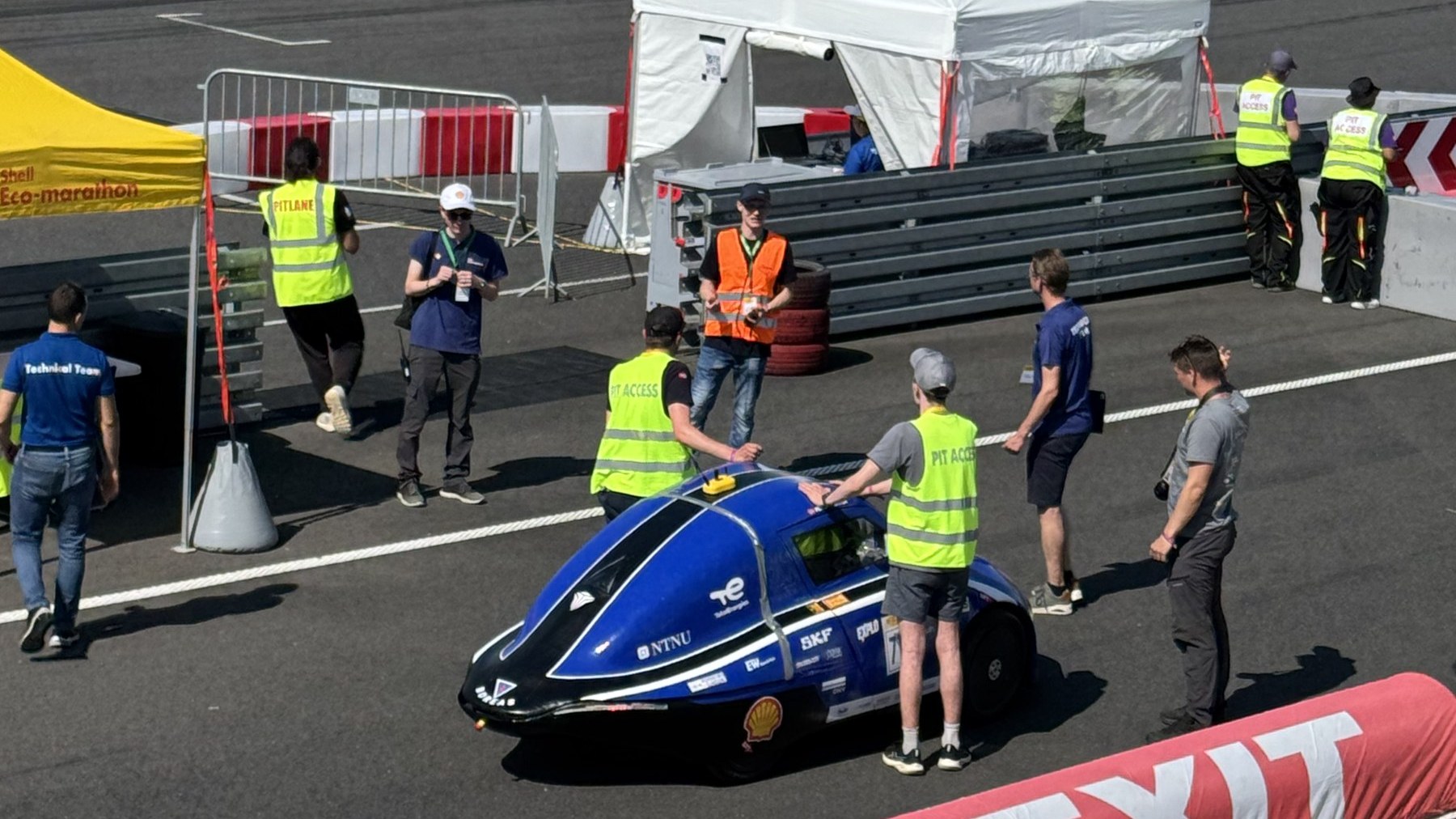
A student company that designs and builds its own cars.
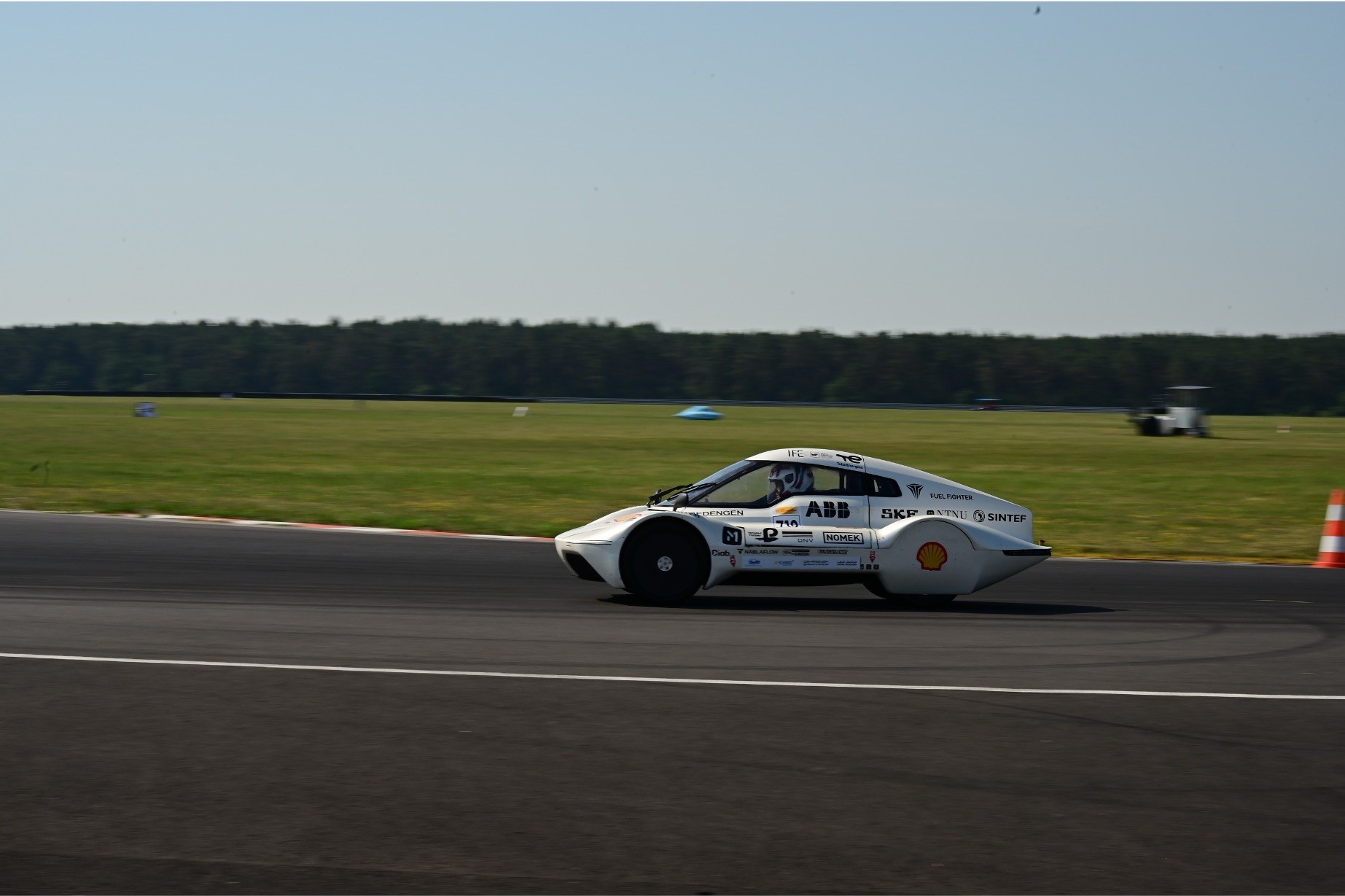
Founded at NTNU in 2008 as the first Norwegian team at Shell Eco-marathon. Today 57 students from ten study programs design, build and race Fuel Fighter 7.
Inspire for a sustainable future.
Fuel Fighter exists to prove how far you can go on almost nothing, and to turn students into engineers who have shipped something real. Every member owns a subsystem from the first sketch to the start line in Poland. The car is the excuse. The people are the point.
We are organised like a small company: a board, six technical and commercial groups, budgets, deadlines and partners who expect results. Nobody gets credits for it. Everybody gets a year they will talk about in job interviews.
Three problems. One car.
Shell Eco-marathon asks a simple question: how far can you drive on one kilowatt hour? Answering it takes three things at once.
A street legal looking car built to use almost nothing.
Urban Concept cars must look and behave like real vehicles: four wheels, lights, wipers, a luggage compartment and a driver sitting upright. Inside those rules we fight for every watt. The mechanical, electrical and chassis groups own the frame, the body, the drivetrain, the battery and the motor controller.
Efficiency is won in the details: rolling resistance, drivetrain losses, aerodynamics and a driving strategy that is tuned lap by lap from telemetry. This is the main event and the reason the team exists.
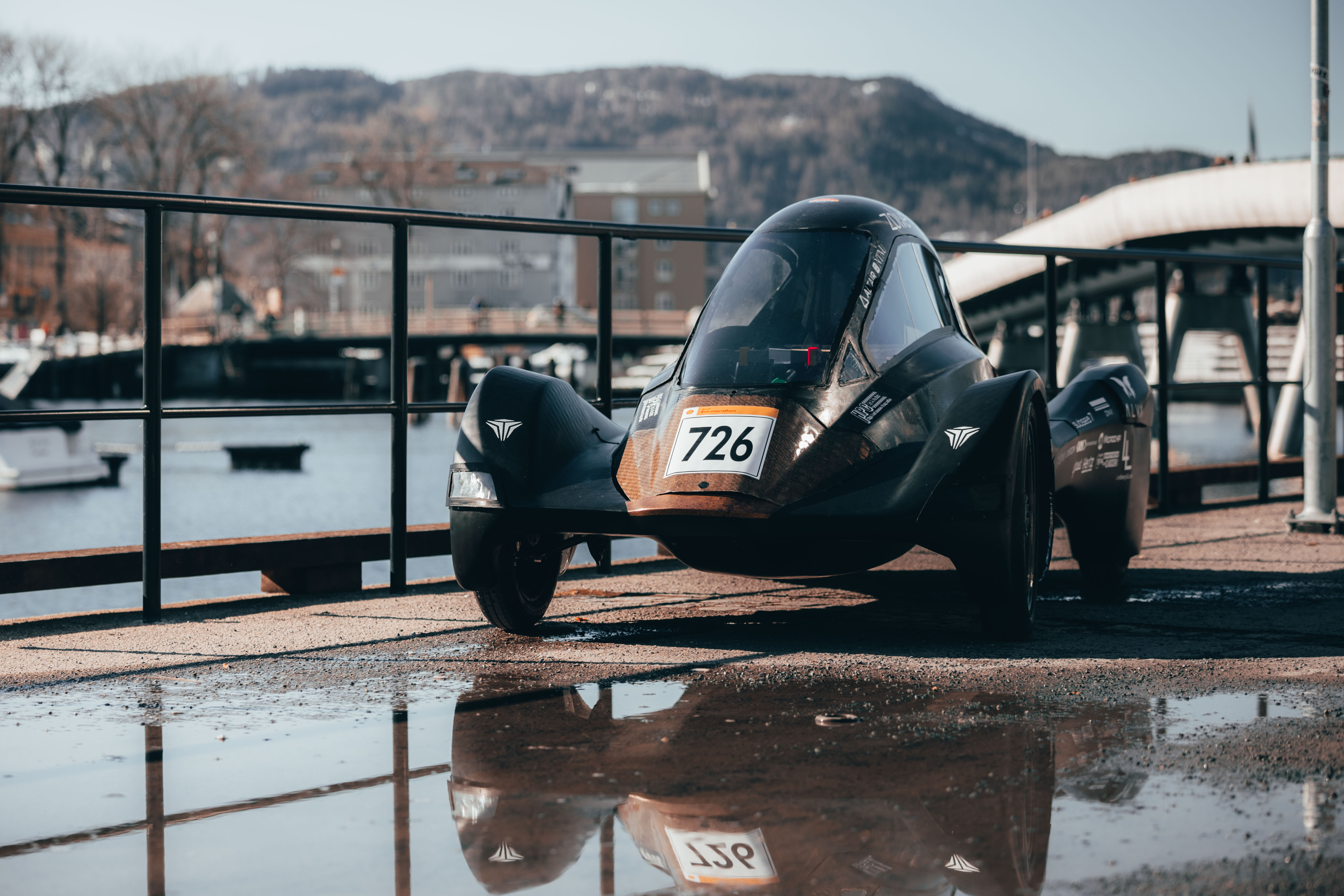
Camera and LiDAR, our own perception stack, no driver.
The Autonomous Urban Concept challenge asks the car to complete a course with nobody inside. Our autonomous group builds the perception, planning and control software in house and integrates it with the same car that runs the efficiency event.
We placed third on our first attempt in 2022 and have kept developing the stack since. It is the closest thing to a self driving startup you can join as a student in Trondheim.
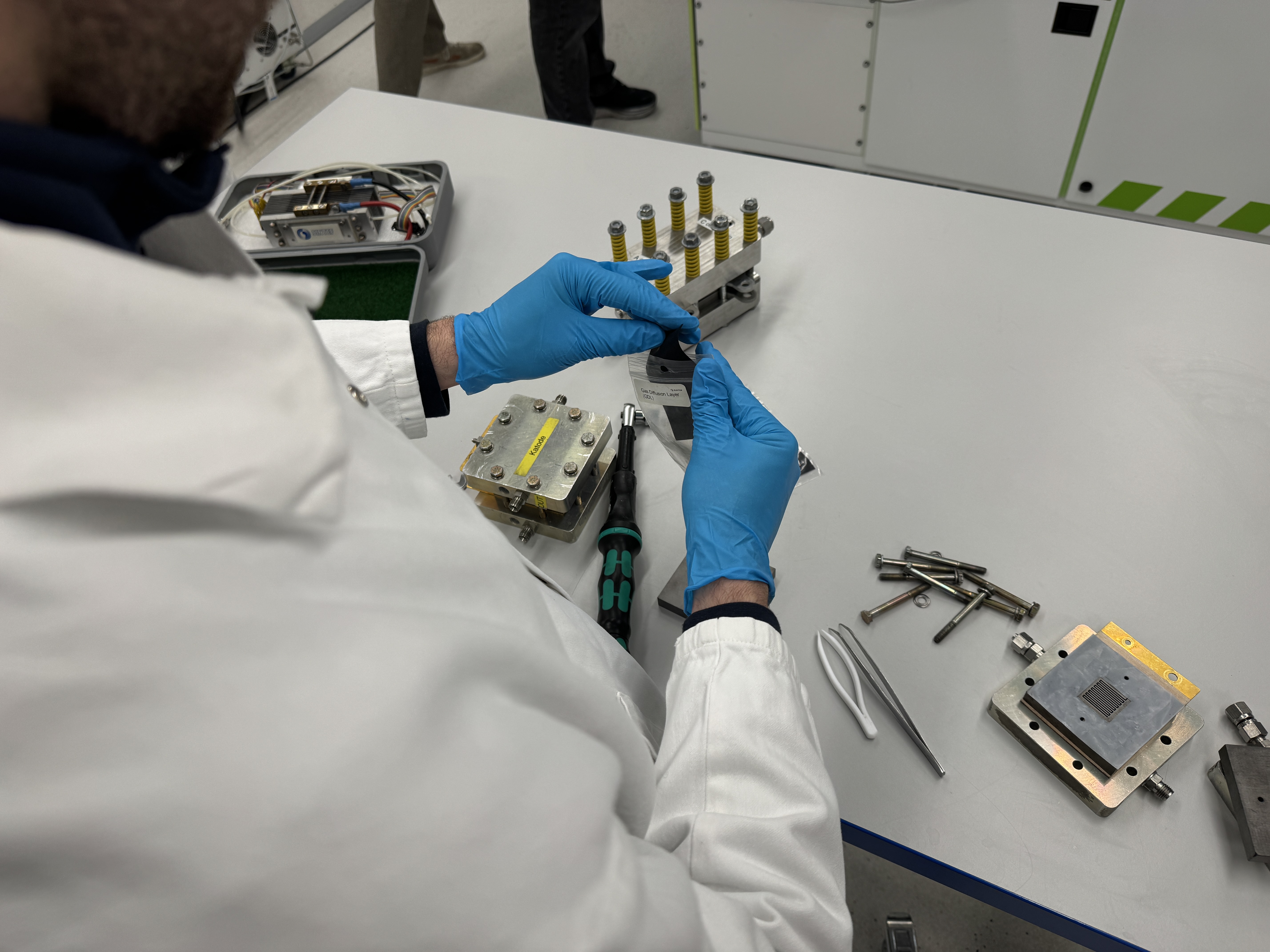
Bringing fuel cells back to Fuel Fighter.
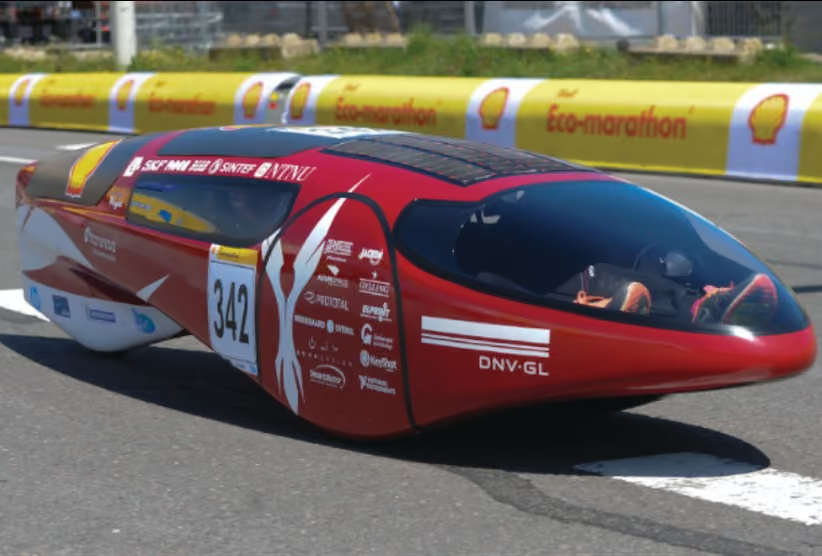
Our 2009 car was an 80 kg hydrogen fuel cell vehicle that set a world record. In autumn 2025 we restarted the hydrogen group to bring fuel cell technology back into the next generation of Fuel Fighter.
The group works on fuel cell integration, hydrogen safety and the test setup needed before a fuel cell car can race again. If you want to work on hydrogen with your hands, this is where it happens.
Shell Eco-marathon
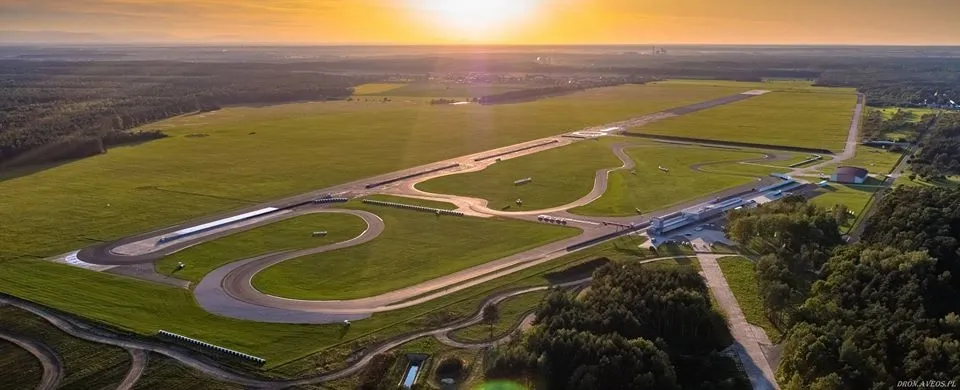
One of the largest student engineering competitions in the world. Teams from across Europe and Africa bring one car each, pass eleven technical inspections, and get a handful of attempts to set the most efficient valid run they can.
Build it with us.
Funding, machine time, materials or expertise. Every contribution ends up on the track, and every partner meets 57 engineers before anyone else does.